
When people think about the Netherlands, one flower immediately comes to mind: the tulip. The Netherlands is world-famous for its beautiful tulip fields, colorful gardens, and large-scale tulip production. Tulips have become one of the most recognizable symbols of Dutch culture and are strongly connected with the country’s history, tourism, and agriculture.
Tulips were originally introduced to the Netherlands from the Ottoman Empire in the 16th century. Over time, Dutch growers became highly skilled at cultivating and developing different varieties of tulips. The flower became increasingly popular, and during the 17th century, tulips played an important role in Dutch history during a period known as “Tulip Mania.” Although tulips were initially considered exotic and valuable, they eventually became a major part of Dutch horticulture.
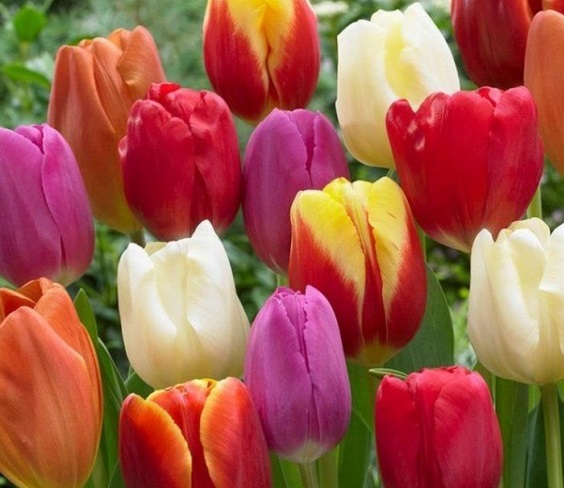
Today, the Netherlands is one of the world’s leading countries in the production and trade of flower bulbs, especially tulips. Every spring, millions of tulips bloom across the Dutch countryside, creating spectacular landscapes filled with red, yellow, pink, purple, orange, and white flowers. These colorful fields attract visitors from all over the world.
One of the most famous places to see tulips is Keukenhof, a large flower garden located near Lisse. Every year, visitors can see millions of flowering bulbs arranged in beautiful gardens and displays. Keukenhof has become one of the most popular attractions in the Netherlands during the spring season.
The Dutch flower industry is also important economically. Flowers and flower bulbs are grown, traded, and exported to many countries around the world. Dutch flower auctions and horticultural businesses play an important role in the international flower market. Tulips are not only grown for local gardens but are also shipped internationally, allowing people around the world to enjoy Dutch flowers.
Tulips are available in many shapes, colors, and varieties. Some have large traditional flowers, while others have fringed, double, or uniquely shaped petals. Different colors can also create different impressions. Red tulips are often associated with love, while yellow tulips can represent happiness and friendship. Pink, purple, orange, and white tulips are also widely admired for their beauty.
Although the tulip is the most famous flower associated with the Netherlands, the country is also known for roses, lilies, daffodils, hyacinths, and other ornamental flowers. However, when someone asks, “What flower is famous in the Netherlands?”, the answer is almost always the tulip.
The tulip represents the beauty of the Dutch countryside and has become an important symbol of the Netherlands. From colorful spring fields to carefully designed gardens and international flower markets, tulips can be found throughout Dutch culture and horticulture. For many people around the world, seeing a field of blooming tulips in the Netherlands is one of the most memorable images of the country.
How did the tulip travel from the Ottoman Empire to Netherlands?
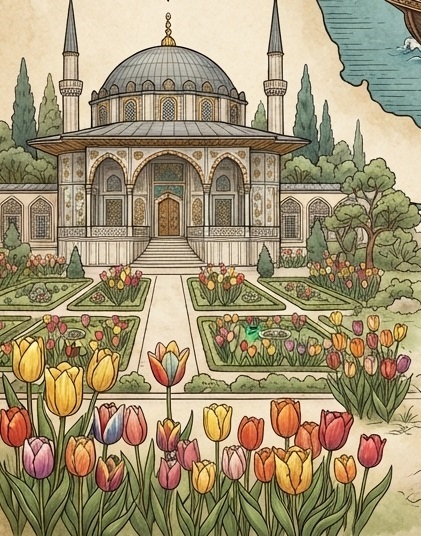
During the reign of Suleiman the Magnificent, an ambassador from Austria named Busbecq arrived to meet the Sultan. He took notes on everything he saw along the way. From the moment he crossed into imperial territory, he was struck by the people’s love for flowers, noting: “Turks generally do not spend money on anything and live very modestly, yet when it comes to flowers, they are willing to pay. They love not only garden flowers but also cut flowers, which they even wear in their hair.” Upon his return, he took several tulip bulbs—along with many other items—back to Europe. He first took them to Vienna, where he gifted them to a botanist friend. Later, that botanist was invited to work at a palace in Leiden, the Netherlands, and that is how the tulip made its way to the Dutch lands. It became immensely popular in the Netherlands and was highly prized. In fact, the 17th century saw a phenomenon known as “Tulipomania”—a tulip craze—sweep through the country. It reached such a point that a substantial dowry might consist of nothing more than a single valuable tulip bulb, or houses would change hands in exchange for a few bulbs. Tulip gardens were created, and because the flowers were so precious, mirrors were placed among them to make them appear more numerous. When the tulip market suddenly crashed, it led to devastating bankruptcies linked solely to the flower. While the tulip craze eventually ended, the love and interest in the tulip endured. As you know, the Netherlands is now the world’s largest tulip grower and exporter. Whenever I visit the Netherlands, we discuss this topic; they openly state and write everywhere that the tulip originated here. They never deny it. The tulip went from here to there, where it was propagated and its true value was recognized. It is worth noting this fact. Of course, tulips are now grown and loved in many parts of the world—for instance, in Canada—and we, too, have now embraced the tulip once again.
The history of Dutch tulips is closely connected with the Ottoman Empire and the relationship between Europe and the Ottoman world during the 16th century. Although the Netherlands is now famous throughout the world for its tulips, the flower did not originally come from the Netherlands. Its journey to Western Europe is often associated with the Ottoman period, particularly the reign of Sultan Suleiman the Magnificent, known as Kanuni Sultan Süleyman.
During the reign of Sultan Suleiman, an Austrian ambassador named Ogier Ghiselin de Busbecq came to the Ottoman Empire to meet the Sultan. During his journey, Busbecq carefully observed and recorded many things about Ottoman life and culture. One of the things that surprised him greatly was the Ottoman people’s extraordinary love of flowers.
Busbecq noticed that people who generally lived modestly and did not spend money unnecessarily were willing to spend considerable amounts on flowers. Flowers were not simply used to decorate gardens. People also loved cut flowers and sometimes wore flowers on their clothes or even on their heads. This strong appreciation of flowers left a lasting impression on Busbecq.
During his return journey to Europe, Busbecq took several tulip bulbs with him, together with other plants and objects that he had collected from the Ottoman Empire. He first brought the bulbs to Vienna, where he gave them to a botanist and friend. This botanist later moved to the Netherlands after being invited to work in Leiden. Through this connection, tulips eventually reached the Netherlands and began a remarkable new chapter in their history.
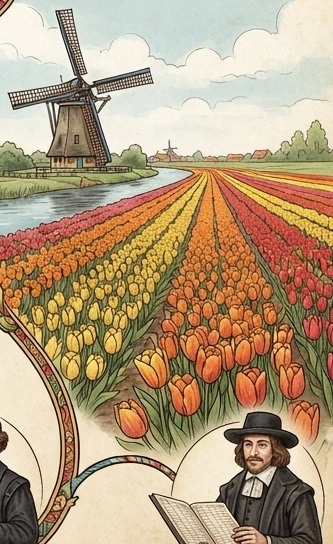
The Dutch people quickly developed a great interest in tulips. They began cultivating, breeding, and producing new varieties of the flower. Tulips became highly valued, and their popularity grew rapidly. During the 17th century, this enthusiasm reached an extraordinary level and became known as Tulip Mania, or “Tulipomania.”
During Tulip Mania, rare tulip bulbs could become extremely valuable. In some cases, a valuable tulip bulb could represent a person’s entire fortune. Stories from the period describe houses and other valuable possessions being exchanged for small numbers of rare bulbs. Tulip gardens became fashionable, and because rare flowers were considered precious, mirrors were sometimes placed around gardens to make the flowers appear more numerous and impressive.
Eventually, the tulip market experienced a dramatic decline. Prices collapsed, and many people who had invested heavily in tulip bulbs faced serious financial losses. The period of Tulip Mania came to an end, but the Dutch love of tulips did not disappear.
Instead, the Netherlands gradually became one of the world’s leading centers for tulip cultivation, horticulture, and flower exports. Dutch growers developed sophisticated methods for producing and breeding tulips, and today Dutch tulip bulbs and flowers are exported to countries around the world.
It is important to distinguish between the origin of the tulip’s cultivation in the Ottoman world and the Netherlands’ enormous contribution to modern tulip breeding and commercial production. The tulip’s journey to Western Europe is strongly connected with the Ottoman Empire, while the Dutch later transformed tulip cultivation into a highly developed horticultural industry.
Today, the tulip is one of the most recognizable symbols of the Netherlands. Every spring, millions of tulips bloom across the Dutch countryside, attracting visitors from all over the world. Places such as Keukenhof and the flower-growing regions around Lisse have become famous for their spectacular displays.
Interestingly, tulips are now loved and cultivated far beyond the Netherlands. Countries such as Canada and many other parts of the world have developed their own tulip-growing traditions. At the same time, there has been renewed interest in the historical connection between the tulip and the Ottoman world.
The story of the Dutch tulip is therefore more than a story about a flower. It is a story of cultural exchange, travel, admiration, horticulture, commerce, and transformation. A flower that was deeply appreciated in the Ottoman Empire traveled to Europe, became extraordinarily valuable in the Netherlands, survived the dramatic Tulip Mania, and eventually became one of the country’s most famous symbols.