
Norway has a rich variety of plants, but most of its vegetation is adapted to a cold, northern climate with long winters, short summers, and mountainous terrain. Because of this, plant life changes a lot from the south to the far north.
In southern Norway, you can find dense forests with Norway spruce, Scots pine, and birch trees. These coniferous forests are the most common vegetation type in the country. The ground is often covered with moss, blueberries, and wildflowers like heather and anemones. In coastal and lowland areas, you also see farmland plants, grasslands, and garden species.
Moving further north and into higher mountain regions, the environment becomes much harsher. Here, trees become rare and are replaced by tundra vegetation, such as mosses, lichens, and hardy shrubs. These plants are specially adapted to survive cold temperatures, strong winds, and poor soil conditions.
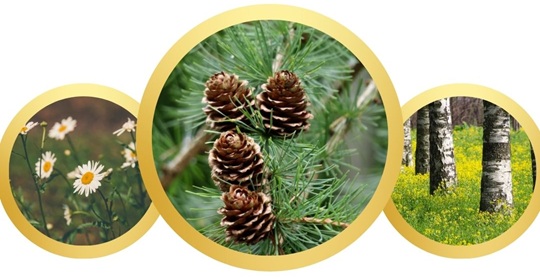
Norway is also known for its beautiful wildflowers, especially during the short summer season. Plants like lupines, buttercups, and Arctic poppies add bright colors to the landscape. In addition, berries such as blueberries, cloudberries, and lingonberries are very common and widely found in forests.
In summary, Norway’s plant life mainly consists of coniferous forests, mountain tundra plants, and seasonal wildflowers, all adapted to its cold and diverse natural environment.
Plants in Norway
Norway has a cold and diverse natural environment, so its plant life is mainly made up of coniferous trees, hardy wildflowers, and cold-resistant fruit trees. Below are some of the most important and commonly found plant types in Norway.
🌲 5 Important Trees in Norway
Norway’s forests are mostly dominated by coniferous and birch trees:
- Norway Spruce (Picea abies) – The most common forest tree in Norway, widely used for timber and Christmas trees.
- Scots Pine (Pinus sylvestris) – A strong, long-living pine tree found in many natural forests.
- Downy Birch (Betula pubescens) – A typical northern birch tree that grows in colder regions.
- Silver Birch (Betula pendula) – Known for its white bark and elegant appearance.
- Rowan Tree (Sorbus aucuparia) – Produces red berries and is common in forests and mountain areas.
🌸 5 Important Flowers in Norway
Norway has many wildflowers that bloom especially in summer:
- Common Heather (Calluna vulgaris) – Purple flowers often covering large areas of land.
- Arctic Poppy (Papaver radicatum) – A bright yellow flower adapted to cold climates.
- Lupine (Lupinus polyphyllus) – A colorful flower seen along roadsides and fields.
- Wood Anemone (Anemone nemorosa) – One of the first spring flowers in Norwegian forests.
- Buttercup (Ranunculus acris) – A bright yellow wildflower found in meadows.
🍎 5 Important Fruit Trees in Norway
Due to the cold climate, fruit trees must be hardy:
- Apple Tree (Malus domestica) – The most common fruit tree in Norway.
- Plum Tree (Prunus domestica) – Grows well in southern parts of the country.
- Cherry Tree (Prunus avium) – Produces sweet cherries in warmer regions.
- Pear Tree (Pyrus communis) – Less common but still grown in gardens and farms.
- Sour Cherry (Prunus cerasus) – Very suitable for cold climates and widely cultivated.
🌿 Summary
Norway’s plant life is shaped by its cold climate and mountainous geography. The country is rich in spruce and pine forests, colorful wildflowers, and hardy fruit trees that can survive low temperatures. These plants form an important part of Norway’s natural beauty and ecological system.