
The oleander tree (Nerium oleander) is native to a region spanning from the Mediterranean to the Indian subcontinent. It is believed to have originated in the Mediterranean region, specifically in the eastern Mediterranean and the Middle East. From there, it spread to various parts of the world through trade and cultivation.
Oleander is commonly associated with Mediterranean countries, including Greece, Italy, Spain, and Turkey, where it is often found growing in the wild and cultivated in gardens. It has also become naturalized in many subtropical and tropical regions worldwide due to its adaptability and ornamental value.
While oleander is not native to all countries, it has been widely introduced and cultivated in various regions due to its attractive flowers, tolerance to harsh conditions, and ornamental appeal. Today, oleander can be found in many countries with suitable climates, including parts of North America, South America, Africa, Asia, and Australia.
Information about the oleander tree
The oleander tree, scientifically known as Nerium oleander, is a versatile and ornamental plant that belongs to the Apocynaceae family. Here are some key pieces of information about the oleander tree:
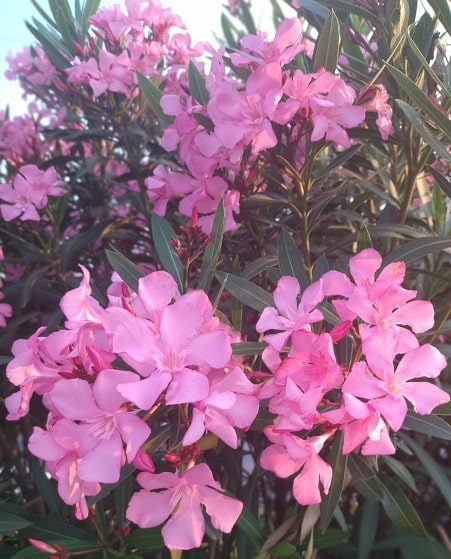
Appearance: Oleander is a large, evergreen shrub or small tree that can reach heights of up to 20 feet (6 meters). It has a dense, bushy growth habit with long, lance-shaped leaves that are leathery and glossy. The leaves are typically dark green, but there are also variegated cultivars with yellow or white margins.
Flowers: One of the most striking features of the oleander tree is its beautiful and showy flowers. The flowers are borne in clusters at the ends of the branches and come in a range of colors, including shades of pink, red, white, and yellow. They have a characteristic funnel shape and a subtle, sweet fragrance. Each flower typically has five petals.
Toxicity: It is important to note that all parts of the oleander tree, including the leaves, flowers, and sap, contain toxic compounds. These compounds, such as oleandrin and nerioside, can be harmful if ingested or if there is contact with the sap. Extra caution should be taken to keep children and pets away from the plant.
Adaptability: Oleander is known for its ability to tolerate a wide range of growing conditions. It thrives in full sun and is highly drought-tolerant once established. It can also tolerate poor soil conditions, including sandy or clayey soils. Oleander is well-suited for coastal regions due to its tolerance to salt spray and wind.
Uses: Oleander is commonly used as an ornamental plant in gardens, landscapes, and parks. Its vibrant flowers and lush foliage make it a popular choice for adding color and visual interest to outdoor spaces. Oleander can be grown as a standalone specimen, pruned into hedges or screens, or shaped into topiaries. In some regions, oleander is also used for erosion control and highway plantings.
Cultivars: There are numerous cultivars and varieties of oleander available, offering a range of flower colors and growth habits. Some popular cultivars include ‘Petite Pink’, ‘Sister Agnes’, ‘Mrs. Lucille Hutchings’, and ‘Calypso’. These cultivars may vary in size, flower color, and cold hardiness.
As with any plant, proper care and caution should be taken when handling and cultivating oleander. It is recommended to consult local gardening resources or professionals for specific guidance on growing oleander in your particular region.
Where is the oleander tree most commonly used?
The oleander tree (Nerium oleander) is commonly used in various regions around the world for its ornamental value and adaptability. Here are some common uses of the oleander tree:
- Landscaping and Gardens: Oleander is widely used in landscaping and gardens, particularly in Mediterranean and subtropical regions. Its vibrant flowers, glossy foliage, and ability to withstand harsh conditions make it a popular choice for adding color and visual appeal to outdoor spaces. Oleander can be planted as standalone specimens, grouped in clusters, or shaped into hedges and screens.
- Public Parks and Roadside Plantings: Due to its tolerance for poor soils, heat, and drought, oleander is often used in public parks and along roadsides in regions with a Mediterranean or subtropical climate. Its dense growth habit and showy flowers make it suitable for creating attractive green spaces and adding beauty to urban landscapes.
- Coastal Plantings: Oleander is well-suited for coastal areas as it can tolerate salt spray, wind, and sandy soils. It is frequently used for stabilizing dunes, preventing erosion, and providing a natural barrier against coastal winds. Its ability to withstand the challenging conditions of coastal environments makes it a valuable plant for beachfront properties and coastal gardens.
- Container Planting: Oleander can be grown in containers, making it a popular choice for patio gardens, balconies, and courtyards. Container-grown oleander can be moved indoors during colder months in regions where frost or freezing temperatures occur.
- Medicinal and Traditional Uses: While primarily cultivated for ornamental purposes, oleander has a history of medicinal and traditional uses in some cultures. However, it is essential to note that all parts of the oleander plant are highly toxic, and any medicinal use should be approached with extreme caution and under the guidance of qualified experts.
It’s important to check with local gardening resources, nurseries, and botanical gardens to ensure that oleander is suitable for your specific region and to learn about any regulations or precautions regarding its cultivation. Additionally, due to its toxicity, it is crucial to prevent access to oleander plants by children and pets to avoid any accidental ingestion.
Is oleander a tree or a shrub?
Oleander (Nerium oleander) is considered both a tree and a shrub, depending on how it is grown and pruned. In its natural form, oleander typically grows as a large, multi-stemmed shrub. It has a dense and bushy growth habit with multiple branches arising from the base. In this shrub form, it can reach heights of up to 20 feet (6 meters) or more.
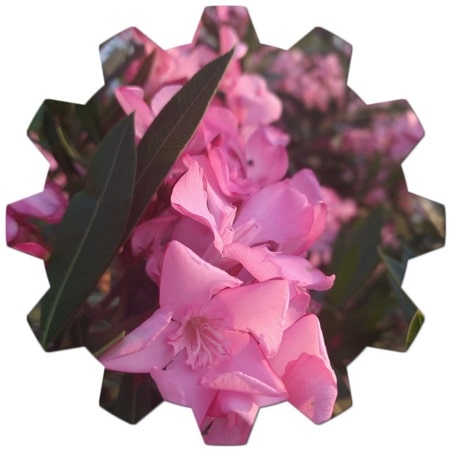
However, with proper care and pruning, oleander can be trained into a tree-like form. By selectively removing lower branches and shaping the plant, it is possible to create a single-trunked structure resembling a small tree. In this tree form, oleander can reach similar heights but with a more upright and defined central trunk.
The choice of growing oleander as a shrub or a tree often depends on personal preference, available space, and the desired visual impact in the landscape. Both forms of oleander can be attractive and provide the characteristic vibrant flowers and glossy foliage that make this plant popular for ornamental purposes.
It’s important to note that regardless of whether oleander is grown as a shrub or a tree, all parts of the plant, including the leaves, flowers, and sap, are toxic if ingested or if there is contact with the sap. Proper precautions should be taken to ensure the safety of children, pets, and individuals who may come into contact with the plant.
Is the oleander tree poisonous?
Yes, the oleander tree (Nerium oleander) is highly toxic. All parts of the plant, including the leaves, flowers, stems, and sap, contain toxic compounds known as cardiac glycosides. These compounds, such as oleandrin and nerioside, can be dangerous if ingested or if there is contact with the sap.
The toxicity of oleander is well-documented, and it is considered one of the most poisonous plants commonly found in gardens and landscapes. Ingesting any part of the plant can lead to severe poisoning, which affects the heart, gastrointestinal system, and central nervous system.
It is crucial to exercise caution and take appropriate measures to prevent accidental ingestion or contact with the plant. Keep oleander plants out of the reach of children and pets, and avoid handling the plant without protective gloves. If you suspect ingestion or exposure to oleander, seek immediate medical attention or contact a poison control center.
Due to its toxicity, oleander should not be planted in areas where there is a risk of accidental ingestion by children or pets. It is also important to responsibly dispose of any clippings or plant debris to prevent accidental exposure. Where does the oleander tree grow? Information about oleander >>